Here are some common approaches to valuing startups:
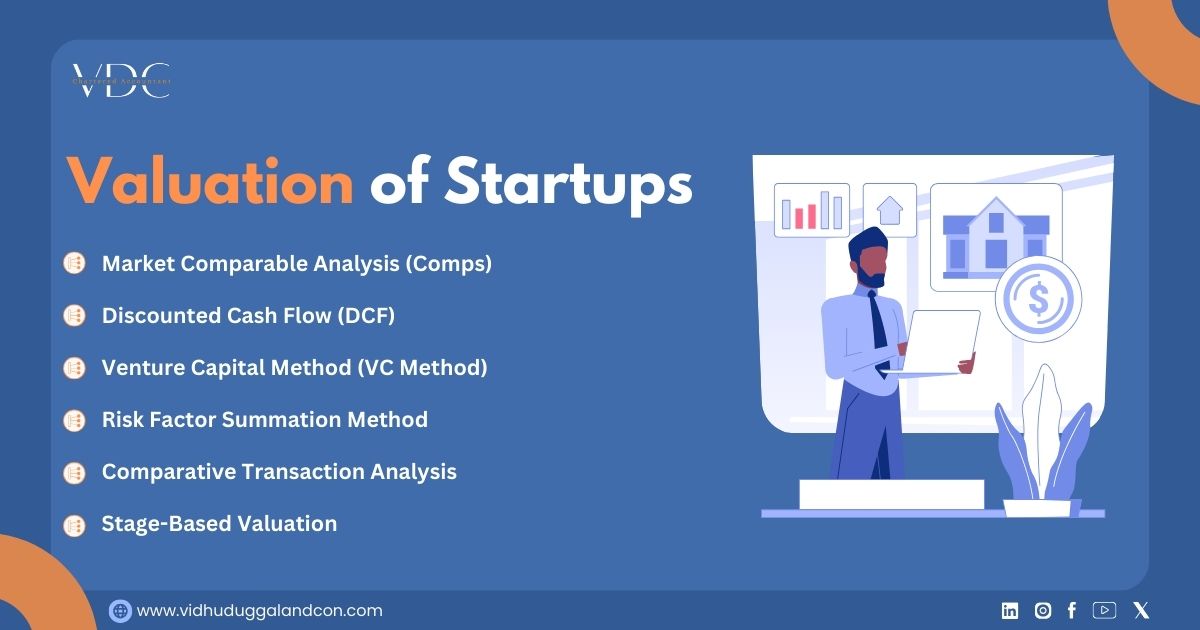
🔘Market Comparable Analysis (Comps): Compare the startup to similar companies in the industry that have recently been funded or acquired. This involves looking at the valuation metrics of comparable companies, such as revenue multiples, user metrics, or engagement metrics. #MarketAnalysis 📊
🔘Discounted Cash Flow (DCF): While not as straightforward for startups due to uncertain cash flows, some investors still use DCF by forecasting future cash flows and discounting them back to present value. This method requires making assumptions about the startup's growth rate, market size, and other variables. #DCF 💰
🔘Venture Capital Method (VC Method): This approach considers the expected exit value of the startup, often through an acquisition or IPO. Investors estimate the future exit value and work backward to determine the required rate of return, considering the startup's current stage and risk profile. #VCMethod 🚀
🔘Risk Factor Summation Method: Evaluate and assign values to specific risk factors associated with the startup, such as technology risk, market risk, competition, and regulatory risks. The total risk-adjusted value is then determined. #RiskFactors 🔍
🔘Comparative Transaction Analysis: Examine the terms and valuations of recent investment deals or acquisitions in the same or similar industries to benchmark the startup's valuation. #TransactionAnalysis 💼
🔘Stage-Based Valuation: Assign different valuations based on the startup's development stage (e.g., seed stage, Series A, Series B). Early-stage startups may have valuations based more on potential and promise than on current financial metrics. #StageValuation 🌱
It's essential to note that startup valuation is inherently subjective and can vary among investors. It often involves negotiations between the startup and investors, taking into account factors such as the startup's growth potential, market conditions, competitive landscape, and the level of investor interest. Additionally, the valuation process evolves as the startup progresses through different funding rounds and achieves milestones.
#StartupValuation 📈 #startupcompany #vdc #cavidhuduggal #vidhuduggalandcompany